By the mid 1800s, the already prevalent myth of the American West promised a new life for anyone with the pluck and rugged individuality to make the journey and start anew. Historians have discussed the implications of this new social environment for years, and have largely agreed that the West was a land of opportunity for women just as much as men, citing the “muted” boundaries of gender expectation as a catalyst for a more equal world. While women often performed the same toughness of mind and spirit as their male counterparts, something felt strangely familiar about the expectations they faced.
Rather than replace the high standard of domestic duty performance and place in the social hierarchy, the new addition of outdoor chores and “plucky” were simply added to the list. Women’s social contracts did not change, they multiplied. Starting with their time on the trails to their eventual new homes, women no longer simply bore children (an estimated 40% of women on the overland journey were pregnant), cooked meals (and oftentimes would go without eating themselves to allow their husbands and children more food), and wash dishes (women were particularly hard on themselves for missing days of cleaning, despite the notable lack of available water), they were now expected to help hunting, steer the oxen, lift heavy crates, and generally step up into any labor gap presented. A large number of histories of women’s time on the journey claim that gender expectations were more than just muted, and were rather nearly suspended altogether on trails. However, an examination of firsthand accounts from the women produce documentation of their continued performance as the principle emotional heart of their family units, and base their day-to-day decisions seemingly entirely on the well-being of those around them.
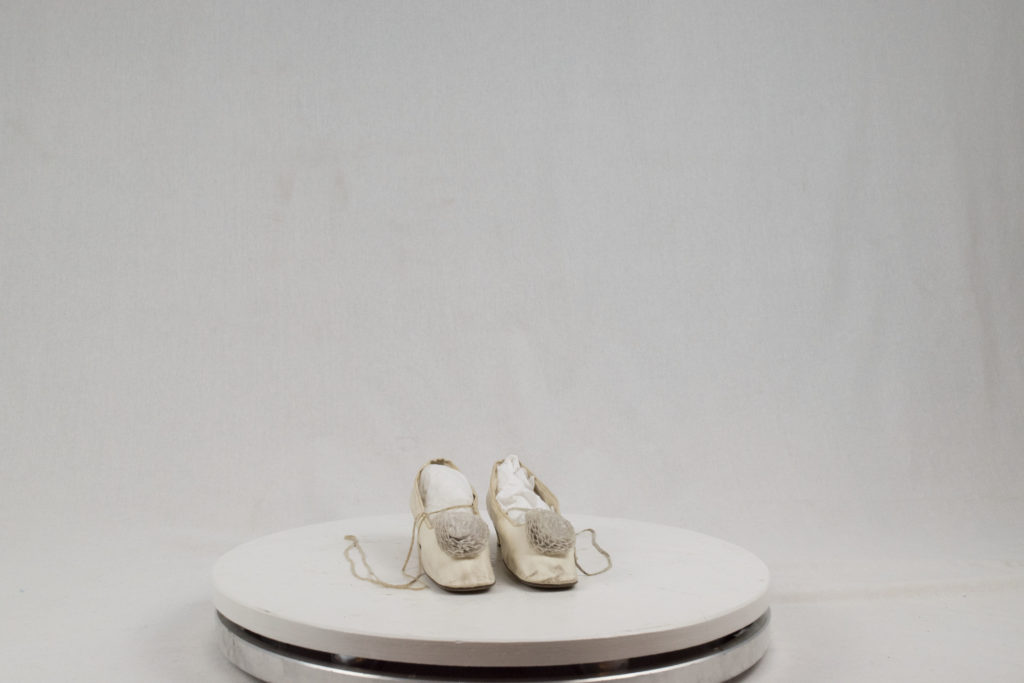
Traditional gender standards did not dissolve upon their arrival to their new homes, with not much more blurring of gender boundaries than the trail offered. Because the domestic framework remained largely intact other than its new additions, women’s work still revolved around their families in quantity and content. Nor was the West a place for the next generation to break free of societally-placed gender roles, as more often than not, domestic duties were passed to the daughters when the mothers were not able. Shoes like the kid leather slippers featured in our commercial were prized for their versatility, a trait that was prized by Western women as they juggled their newly expanded list of what it meant to be a good woman, wife, or mother. In addition to the genteel nature and emotional involvement they always knew, women now had to find a way to balance high class appearance and new fashions with the comfort mandated by physical labor.
While work began to look different for women in the West, it still held the same restrictions and expectation that the United States as a whole had cultivated. A woman’s priority was still expected to be her home: the birth, education, cleanliness of a proper American family.
Advertisement:
References:
Harris, Katherine, “Homesteading in Northeastern Colorado, 1873-1920: Sex Roles and Women’s Experience”, in The Women’s West, ed. by Jameson, Elizabeth and Armitage, Susan (Norman, OK: University of Oklahoma Press. 1987.) pp. 171
Jeffery, Julie Roy, Frontier Women: “Civilizing” the West? 1840-1880, (New York, NY: Hill and Wang. 1998), pp. 96, 98
Faragher, John Mack, Women and Men on the Overland Trail, (New Haven, CT: Yale University
Press. 2001), p. 187.
Women’s Diaries of the Westward Journey, ed. by Lerner, Gerda, (New York, NY: Shocken Books, 1992)
Harris, Katherine, Homesteading, pp. 172